
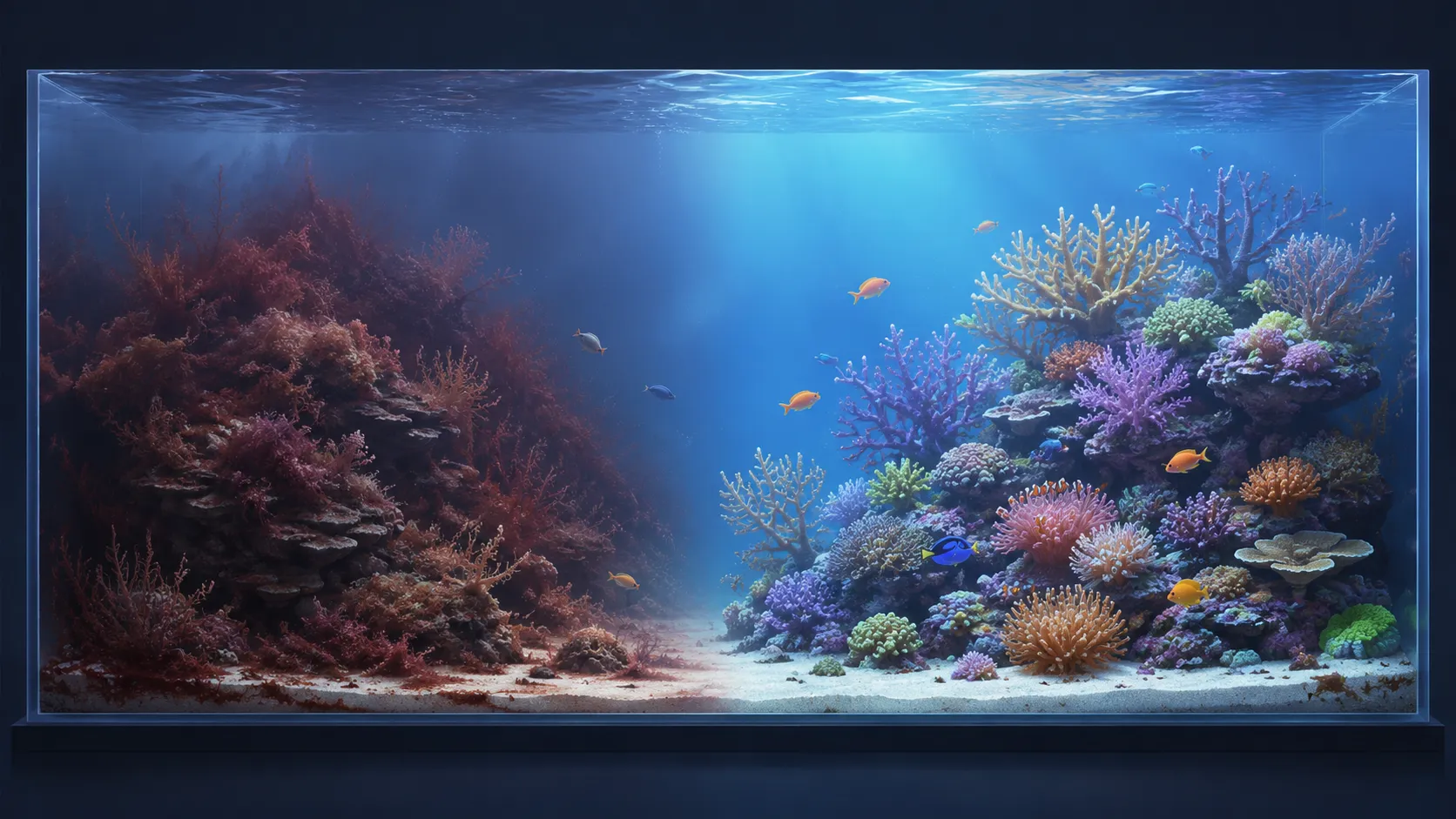
If you’ve ever walked into your room, looked at your beautiful reef tank, and suddenly noticed a red slimy carpet spreading across the sand and rocks, you’re definitely not alone. Few things frustrate saltwater aquarium owners more than a sudden outbreak of red algae, commonly called red slime algae. The strange thing is that what many hobbyists call red algae is often not algae at all. In most cases, it is actually cyanobacteria, a photosynthetic bacteria that thrives when tank conditions become unbalanced. Experts consistently point to excess nutrients, poor water movement, and lighting issues as the primary causes behind these outbreaks.
The reason this problem feels so overwhelming is because red algae rarely appears because of a single mistake. Instead, it usually develops from several small issues that quietly build up over time. Maybe feeding increased slightly. Maybe water changes became less frequent. Perhaps the lights stayed on a few hours longer each day. Each small change acts like another piece of wood added to a campfire until the outbreak suddenly explodes across the aquarium.
The good news is that red algae can be controlled and eliminated. More importantly, it can be prevented from returning. The key is understanding what is happening inside your tank rather than simply treating the visible slime. When you address the root causes, the aquarium becomes naturally resistant to future outbreaks. That means healthier corals, cleaner sand beds, clearer water, and far less maintenance stress.
Understanding What Red Algae Really Is
Red Algae vs Cyanobacteria
One of the biggest misconceptions in the reef hobby is that every red growth inside an aquarium is algae. In reality, many of the red, purple, or dark maroon patches that form slimy sheets across surfaces are actually cyanobacteria. Unlike true algae, cyanobacteria are ancient bacteria capable of photosynthesis. They behave differently, spread differently, and often require different solutions.
Cyanobacteria typically appears as a slimy mat that can easily peel away from rocks or sand in sheets. True red algae, on the other hand, tends to have a firmer structure and can feel more plant-like. Hobbyists often notice that the red slime seems to reappear within hours or days after cleaning. That rapid comeback is one of the telltale signs of cyanobacteria growth.
Think of cyanobacteria like weeds growing in cracks of a sidewalk. Pulling the visible growth removes the symptom, but unless the conditions allowing it to flourish are corrected, it quickly returns. This explains why some aquarium owners spend months scrubbing surfaces only to find the red slime spreading even faster afterward.
Understanding this distinction changes the entire approach to treatment. Instead of focusing solely on removal, successful reef keepers target nutrient levels, circulation, filtration, and lighting. Once these environmental factors improve, cyanobacteria loses its competitive advantage and begins disappearing naturally.
Why It Appears in Reef Tanks So Often
Saltwater aquariums create the perfect environment for biological activity. Fish produce waste. Corals consume nutrients. Food decomposes. Beneficial bacteria process organic material. When everything remains balanced, the ecosystem functions smoothly. The moment that balance shifts, opportunistic organisms like cyanobacteria take advantage.
New tanks are especially vulnerable. During the first few months, biological filtration systems are still developing. Nutrient fluctuations are common, and microbial communities haven’t fully stabilized. This instability often triggers temporary cyanobacteria blooms. Experienced reef keepers frequently describe these outbreaks as a normal stage of aquarium maturation.
Older tanks are not immune either. A neglected filter, excess feeding, deteriorating water quality, or aging lighting equipment can create similar conditions. In both cases, cyanobacteria acts like an alarm system. Rather than being the actual problem, it often signals that something deeper within the aquarium ecosystem requires attention.
What Causes Red Algae to Spread So Quickly
Excess Nutrients and Organic Waste
Nutrients are the primary fuel source behind most red algae outbreaks. Specifically, elevated levels of nitrate and phosphate provide the energy cyanobacteria needs to multiply rapidly. These compounds enter the aquarium through fish waste, uneaten food, decomposing organic matter, and contaminated source water.
Imagine dumping fertilizer onto a lawn. Grass grows faster because it suddenly has more resources available. Cyanobacteria behaves exactly the same way. Once nitrate and phosphate levels rise beyond what beneficial organisms can consume, the bacteria seize the opportunity and expand aggressively.
The following table highlights common nutrient sources:
| Source | Contribution to Algae Growth |
|---|---|
| Overfeeding | Excess food decomposes into nutrients |
| Fish Waste | Continuous nitrate production |
| Dead Organics | Breakdown releases phosphate |
| Dirty Filters | Trapped waste becomes nutrient-rich |
| Tap Water | Can introduce phosphate and silicates |
Many aquarists unknowingly worsen the issue by adding more food than fish can consume. Even small daily excesses accumulate over weeks. Before long, nutrient concentrations become high enough to support explosive bacterial growth.
Poor Water Circulation and Dead Zones
Flow is one of the most underrated weapons against red algae. Cyanobacteria loves stagnant areas where water movement is minimal. These low-flow regions allow organic debris to settle and create localized nutrient hotspots.
Look closely at where red slime first appears. It often develops behind rocks, in corners, beneath coral shelves, or across still sections of sand. These are areas where waste accumulates because circulation isn’t strong enough to keep particles suspended for filtration.
Modern reef aquariums frequently use wavemakers and powerheads specifically to eliminate these dead spots. Increased flow not only prevents debris buildup but also makes it harder for cyanobacteria to establish stable colonies. Many hobbyists report significant improvement simply by redirecting existing pumps toward problem areas. Community discussions repeatedly mention increased flow as one of the most effective non-chemical solutions available.
Lighting Mistakes That Fuel Growth
Light powers photosynthesis, which means it directly influences cyanobacteria growth. Excessive lighting duration, outdated bulbs, or overly intense fixtures can all accelerate outbreaks. Because cyanobacteria photosynthesizes efficiently, it often outcompetes beneficial organisms when lighting conditions become excessive.
Many aquarium owners assume longer lighting periods automatically benefit corals. The reality is more complicated. Corals need light, but so does cyanobacteria. Extending photoperiods beyond necessity often provides more opportunities for nuisance organisms to thrive.
Finding the right balance is critical. Healthy reef tanks commonly maintain lighting schedules around eight to ten hours depending on coral species and system design. When outbreaks occur, temporarily reducing light duration can significantly slow bacterial growth while other corrective measures take effect.
Early Signs Your Tank Is Out of Balance
Changes in Sand, Rocks, and Glass
Red algae rarely appears overnight. Before major outbreaks occur, subtle warning signs usually emerge. The earliest indicators often appear on sand beds as small reddish patches or thin films. These spots may seem harmless initially but can rapidly expand across surrounding surfaces.
Aquarium glass frequently provides another clue. Increased film accumulation requiring more frequent cleaning often signals rising nutrient levels. Rocks may develop darker coloration, slimy coatings, or unusual discoloration. These visual changes indicate that the biological balance within the tank is beginning to shift.
Paying attention to these small changes can prevent large-scale outbreaks. Many reef keepers who perform weekly inspections catch problems early enough to correct them before cyanobacteria gains momentum. It’s similar to spotting a small roof leak before it becomes a flooded room. Early action dramatically reduces future headaches.
Water Parameter Warning Signals
Visual symptoms are important, but water testing provides deeper insight. Consistently elevated nitrate and phosphate readings often predict algae problems before visible growth appears. According to aquarium experts, maintaining low nutrient concentrations remains one of the most reliable methods for preventing cyanobacteria outbreaks.
Common warning signs include:
- Rising nitrate levels
- Detectable phosphate increases
- Falling pH stability
- Fluctuating alkalinity
- Reduced water clarity
Regular testing transforms aquarium maintenance from guesswork into informed decision-making. Instead of reacting to visible problems, hobbyists can address imbalances proactively.
Water Conditions That Feed Algae Growth
Nitrate and Phosphate Imbalances
Among all water parameters, nitrate and phosphate play the biggest role in fueling red algae growth. Cyanobacteria uses these nutrients like gasoline in an engine. When concentrations rise, expansion accelerates dramatically.
Many successful reef keepers aim for nitrate levels below 20 ppm and phosphate levels below 0.05 ppm. While exact targets vary depending on aquarium type, stable nutrient control consistently correlates with reduced algae issues.
Interestingly, some hobbyists have also observed cyanobacteria outbreaks during periods of unstable nutrient levels rather than simply high nutrients. Sudden drops or fluctuations can disrupt biological competition and allow opportunistic bacteria to dominate temporarily. Community experiences frequently emphasize stability over chasing perfect numbers.
Salinity, pH, and Alkalinity Problems
While nutrients receive most of the attention, other water parameters influence algae growth indirectly. Low pH, unstable alkalinity, and inconsistent salinity can stress corals and beneficial microorganisms. When these desirable organisms weaken, cyanobacteria often gains a competitive advantage.
Recommended ranges commonly include:
| Parameter | Recommended Range |
|---|---|
| pH | 8.0–8.4 |
| Salinity | 1.020–1.025 |
| Alkalinity | 8–12 dKH |
| Ammonia | 0 ppm |
| Nitrite | 0 ppm |
Maintaining stability matters more than constantly adjusting numbers. Frequent corrections can create additional stress within the aquarium ecosystem.
Source Water Quality Issues
Many reef keepers spend months fighting algae without realizing the problem originates from their water source. Tap water often contains phosphate, nitrate, silicates, and other dissolved compounds that support algae growth. Even small amounts accumulate over time.
This explains why reverse osmosis and deionization systems are so popular in the saltwater hobby. By removing contaminants before they enter the aquarium, these systems significantly reduce nutrient introduction. Numerous experts recommend RO/DI water as a foundational defense against recurring algae outbreaks.
Cleaning Methods That Actually Work
Manual Removal Techniques
The fastest way to improve appearance is manual removal. Using a siphon hose, turkey baster, or soft brush allows hobbyists to physically extract cyanobacteria from surfaces. Community discussions repeatedly recommend siphoning during water changes because it removes both the visible growth and some of the trapped nutrients feeding it.
Manual removal works best when combined with corrective measures. Otherwise, the bacteria often returns within days. Think of it like mowing weeds. The yard looks better temporarily, but root causes still remain beneath the surface.
Consistency matters. Small, regular cleaning sessions often outperform occasional aggressive cleanings. This gradual approach minimizes stress while steadily reducing bacterial biomass.
Water Changes and Filtration Improvements
Water changes remain one of the most effective long-term solutions. Replacing 10% to 25% of aquarium water regularly dilutes accumulated nutrients and restores balance. Multiple aquarium experts recommend weekly or biweekly water changes as a cornerstone of algae prevention.
Filtration upgrades can also make a dramatic difference. Protein skimmers remove dissolved organic compounds before they decompose into nitrate and phosphate. Mechanical filters capture debris. Chemical media such as granular ferric oxide help reduce phosphate concentrations. Together, these tools limit the resources available for cyanobacteria growth.
Chemical Treatments and Their Risks
Chemical treatments can eliminate cyanobacteria quickly, and many hobbyists report impressive short-term success. Products designed specifically for red slime often clear visible outbreaks within days. Community feedback frequently highlights rapid results from these treatments.
The challenge is that chemicals rarely address underlying causes. If nutrient imbalances remain unchanged, the outbreak often returns. Some treatments may also affect beneficial bacteria populations, creating additional complications. Experienced reef keepers typically view chemical solutions as temporary tools rather than permanent fixes.
How Lighting Choices Affect the Problem
Duration of Light Exposure
Lighting schedules directly impact algae growth rates. Longer photoperiods provide more energy for photosynthetic organisms, including cyanobacteria. Several aquarists battling outbreaks have reported improvements after reducing daily light exposure.
This doesn’t mean keeping tanks dark permanently. Corals still require adequate light for health and growth. Instead, the goal is finding a balanced schedule that supports desirable organisms without excessively fueling nuisance bacteria.
Temporary blackouts are sometimes used during severe outbreaks. While not a complete solution, they can weaken cyanobacteria and provide time for other corrective measures to work.
Spectrum and Intensity Considerations
Light quality matters as much as duration. Modern LED systems allow hobbyists to adjust intensity and spectral output. Improper settings can unintentionally encourage nuisance growth while providing limited benefits to corals.
Excessively powerful fixtures often create problems when installed without adjustment. Imagine giving a houseplant ten times more sunlight than it needs. Growth becomes unbalanced, and stress follows. Aquariums behave similarly. Matching intensity to livestock requirements helps maintain stability and reduce algae pressure.
Natural Tank Helpers That Can Reduce Algae
Snails, Hermit Crabs, and Clean-Up Crews
Nature provides some useful allies in the battle against algae. Various snails, hermit crabs, and other clean-up crew members consume algae films and organic debris before it accumulates. While they won’t solve severe cyanobacteria outbreaks alone, they contribute significantly to overall tank cleanliness.
A balanced clean-up crew functions like a maintenance team working around the clock. Every uneaten food particle consumed is one less nutrient source available for nuisance growth. Every patch of algae grazed is less surface area for expansion.
Choosing species appropriate for aquarium size and livestock remains essential. Overstocking clean-up crews can create additional nutrient issues rather than solving existing ones.
Beneficial Bacteria and Refugiums
Beneficial bacteria compete directly with cyanobacteria for resources. Healthy microbial diversity strengthens biological stability and makes it harder for nuisance organisms to dominate. Some advanced hobbyists actively cultivate bacterial populations through specialized products and filtration methods.
Refugiums offer another powerful strategy. By growing macroalgae in a separate chamber, aquarists create a natural nutrient export system. The macroalgae consumes nitrate and phosphate before cyanobacteria can utilize them. This approach transforms excess nutrients into harvestable plant growth rather than unwanted slime.
Preventing Red Algae from Returning
Building a Long-Term Maintenance Routine
Long-term success comes from consistency rather than dramatic interventions. Weekly testing, regular water changes, controlled feeding, and equipment maintenance form the foundation of algae prevention. Tanks receiving steady care rarely experience the severe outbreaks common in neglected systems.
A simple routine might include testing nutrients weekly, cleaning filtration equipment monthly, inspecting flow patterns regularly, and performing scheduled water changes. These habits keep conditions stable and minimize opportunities for cyanobacteria to gain a foothold.
The goal isn’t perfection. Every aquarium experiences fluctuations. What matters is preventing small issues from developing into major imbalances.
Creating a Stable Reef Environment
Stability is ultimately the secret ingredient behind every thriving reef aquarium. Fish, corals, beneficial bacteria, and invertebrates all perform best when environmental conditions remain predictable. Cyanobacteria thrives on instability, nutrient excess, and neglected maintenance.
When nutrients remain controlled, flow stays strong, lighting is balanced, and filtration functions properly, red algae struggles to compete. The aquarium becomes a self-regulating ecosystem where beneficial organisms dominate available resources.
Many experienced reef keepers eventually reach a point where algae outbreaks become rare events rather than recurring battles. Their secret isn’t expensive equipment or miracle products. It’s consistency, observation, and patience.
Conclusion
Red algae in a saltwater aquarium can feel like an unstoppable invasion, but it is usually a symptom rather than the root problem. In most cases, the culprit is cyanobacteria taking advantage of excess nutrients, poor circulation, unstable water parameters, and lighting imbalances. Understanding these triggers transforms algae control from a frustrating guessing game into a manageable process.
Successful treatment combines multiple strategies. Manual removal improves appearance immediately. Water changes reduce nutrient buildup. Improved filtration removes waste before it decomposes. Better circulation eliminates dead zones. Proper lighting reduces excess photosynthetic energy. Natural helpers such as snails and beneficial bacteria strengthen overall ecosystem health.
The most important lesson is that lasting results come from addressing causes rather than symptoms. When aquarium conditions become stable and balanced, cyanobacteria loses its advantage. Instead of constantly fighting red slime, you create an environment where it struggles to survive in the first place.
FAQs
1. Is red algae dangerous to fish and corals?
Red algae or cyanobacteria is usually not directly harmful to fish, but it can smother corals, block light, reduce oxygen levels, and create unhealthy tank conditions if allowed to spread extensively.
2. How long does it take to remove red algae completely?
Minor outbreaks may improve within a few weeks when nutrient levels, flow, and maintenance routines are corrected. Severe outbreaks can require several months of consistent effort before complete control is achieved.
3. Can overfeeding really cause red algae?
Yes. Overfeeding is one of the most common causes because uneaten food and fish waste break down into nitrate and phosphate, which fuel cyanobacteria growth.
4. Should I turn off my aquarium lights to fight red algae?
Temporary reductions in lighting can help slow growth, but lighting alone is rarely the root cause. Nutrient control and water quality improvements must also be addressed for lasting success.
5. What is the best water source for preventing algae outbreaks?
RO/DI water is generally considered the best option because it removes phosphate, nitrate, silicates, and other contaminants that can contribute to nuisance algae growth.

Callen Rhodes is a 29-year-old American content writer based in Boise, Idaho. He specializes in outdoor recreation, technology, and lifestyle topics, combining years of blogging experience with careful research and practical insights. His work focuses on producing trustworthy, reader-friendly articles that prioritize accuracy and real-world value. As a regular contributor to sharkanddolphin.xyz, Callen is committed to creating informative content that reflects strong editorial standards and helps readers make informed decisions.