
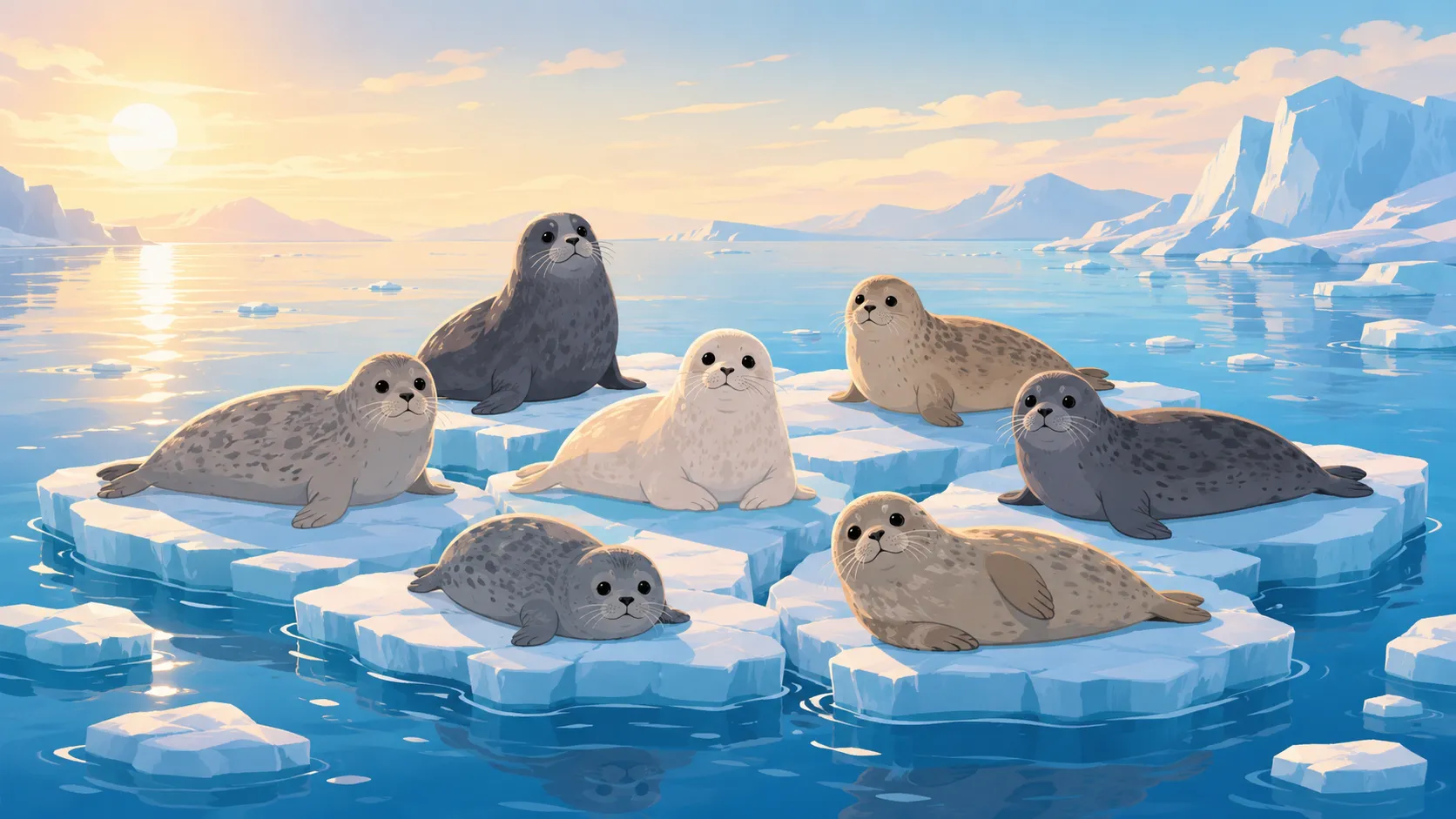
If you’ve ever watched dozens of seals stretched across a rocky shoreline or floating together in icy water, you may have wondered: what is a group of seals called? The answer is surprisingly more complex than many people expect. Unlike some animals that have a single universally accepted collective noun, seals can be described using several different names depending on where they are, what they are doing, and even the season of the year.
Marine biologists and wildlife experts commonly use terms such as colony, pod, herd, rookery, and even harem in specific situations. Each term reveals something about the seals’ behavior and social structure. A gathering of seals resting on a beach may be called something different from a group swimming together in the ocean. During breeding season, entirely different terminology often applies.
The diversity of names reflects the fascinating social lives of these marine mammals. Seals belong to a group known as pinnipeds, which also includes sea lions and walruses. While many people think of seals as quiet, sleepy animals that simply lie around on beaches, their social systems are far more sophisticated. Some species gather in colonies numbering thousands of individuals, while others spend much of their lives alone. Understanding the names used for seal groups opens a window into their remarkable behavior and survival strategies. Researchers continue to discover new insights about how these animals communicate, cooperate, compete, and adapt to changing marine environments.
Understanding Collective Nouns for Seals
Why Animal Groups Have Special Names
Humans have long created unique collective nouns for animal groups. A pride of lions, a school of fish, and a flock of birds all help paint a more vivid picture of animal behavior. These names often emerge from observations of how animals interact with one another. In the case of seals, the variety of collective nouns reflects their highly flexible social arrangements.
Unlike wolves or elephants, seals do not maintain a single social structure year-round. Their behavior changes dramatically depending on migration patterns, food availability, breeding cycles, and environmental conditions. Because of this flexibility, no single term accurately describes every seal gathering. Scientists and wildlife observers often choose a term that best matches the context they are observing.
This variety also helps researchers communicate more accurately. If someone describes a seal rookery, experienced marine biologists immediately understand that breeding activity is taking place. If a pod is mentioned, the image shifts toward seals moving together in water. Language becomes a practical tool for understanding behavior. It is similar to how different words describe weather conditions; rain, drizzle, and storm all involve water but communicate different situations. Seal group terminology works in much the same way, helping observers distinguish between different forms of social organization and interaction.
The Most Common Terms Used for Seal Groups
The most widely recognized names for seal groups include colony, pod, herd, and rookery. Among these, colony and pod are often considered the most common. A colony usually refers to a large gathering of seals on land or ice, while a pod often describes a group swimming or traveling together in the water.
A herd is a broader term frequently applied to seals resting together on beaches or rocky coastlines. Rookery has a much more specialized meaning and typically refers to breeding grounds where mating, birthing, and nursing occur. Some breeding groups are so densely populated that they resemble bustling cities of marine mammals.
There is also the term harem, which refers specifically to breeding arrangements where one dominant male controls access to multiple females during mating season. This structure is particularly common among elephant seals. Each term highlights a unique aspect of seal life. Rather than being random labels, these names tell a story about behavior, survival, reproduction, and social interaction. Understanding them helps transform a simple observation into a richer appreciation of one of the ocean’s most fascinating mammal groups.
Different Names Used for Groups of Seals
Colony
The term colony is perhaps the most scientifically useful name for large gatherings of seals. Colonies often form when hundreds or even thousands of animals congregate in the same location. These gatherings typically occur on beaches, rocky islands, or ice shelves where seals rest, molt, breed, or give birth.
Large colonies create an extraordinary spectacle. The noise alone can be overwhelming, with adults vocalizing, pups calling for mothers, and dominant males defending territories. Despite the apparent chaos, colonies often have recognizable social patterns. Individuals learn to navigate crowded environments while maintaining relationships with offspring and breeding partners.
One of the greatest advantages of colony living is increased protection. Predators may find it harder to target a specific individual when surrounded by hundreds of others. Colonies also create opportunities for learning and information sharing. Younger animals can observe experienced adults, while mothers benefit from the collective vigilance of the group. For many seal species, colony life represents a delicate balance between competition and cooperation, creating some of the most impressive wildlife gatherings on Earth.
Pod
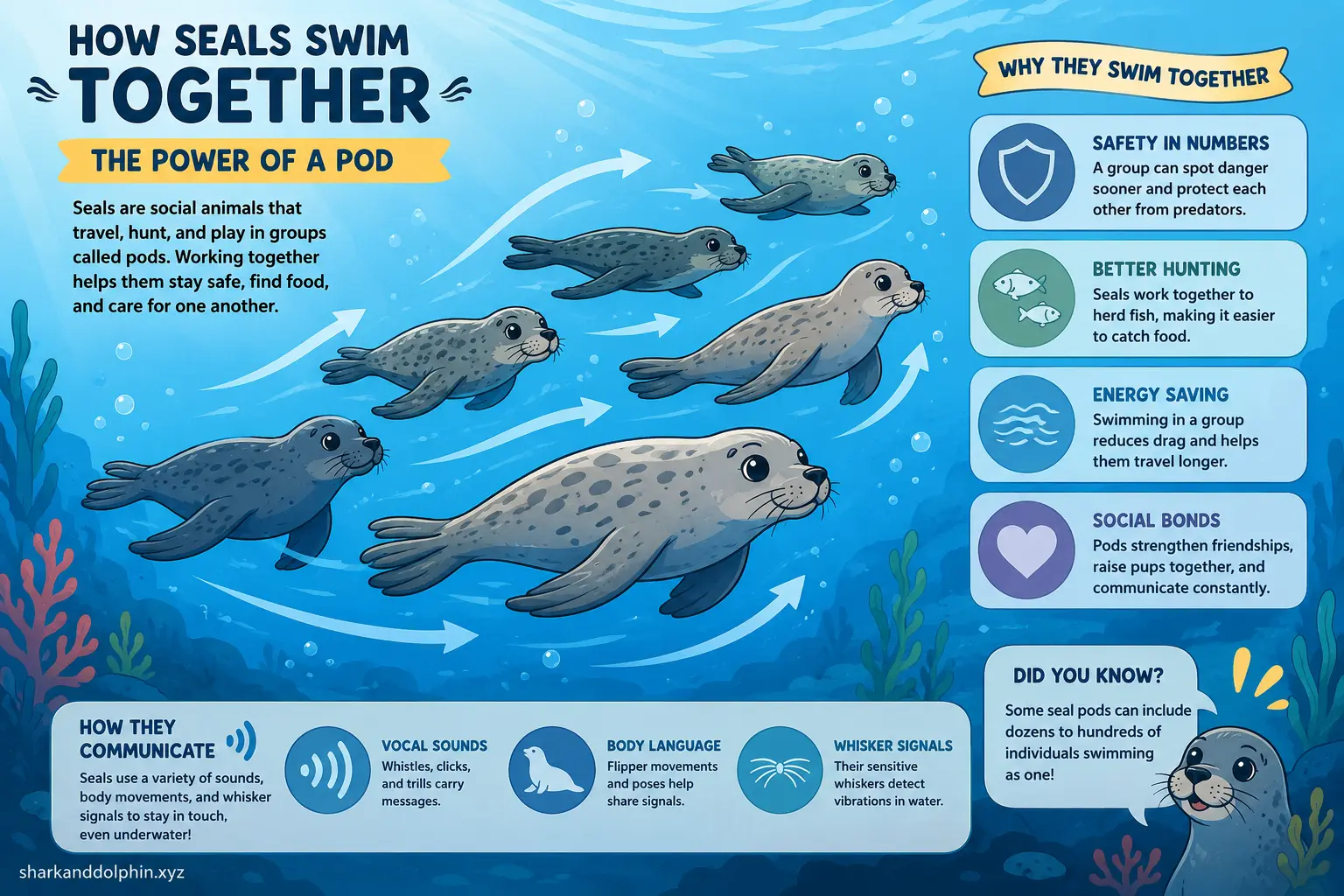
When seals are swimming together in the ocean, the term pod is frequently used. Pods are generally smaller and more fluid than colonies. Members may join or leave the group as they travel, hunt, or explore feeding grounds.
The idea of a pod emphasizes movement and social coordination. While seals are not as socially interconnected as dolphins, they often benefit from traveling in groups. Swimming alongside others can improve awareness of predators and help individuals locate productive feeding areas. Ocean conditions can be unpredictable, and group travel sometimes offers advantages that solitary animals do not enjoy.
Pods also reveal the adaptability of seals. Unlike fixed breeding colonies, pods may form and dissolve rapidly depending on circumstances. A group hunting fish in one location may separate hours later and reunite elsewhere. This flexibility allows seals to balance independence with occasional cooperation. Watching a pod glide through coastal waters demonstrates the graceful side of seal social behavior, far removed from the crowded beaches often associated with breeding season.
Herd
The word herd is commonly applied to seals gathered together on land. When dozens of animals are stretched across a shoreline, basking in the sun or resting after long foraging trips, herd is often the simplest and most descriptive term.
Unlike terrestrial herd animals such as zebras or buffalo, seals do not necessarily move as a coordinated unit. The term primarily reflects their physical proximity rather than a complex social hierarchy. Nevertheless, herd formation still provides benefits. Large groups make it easier to detect threats, conserve warmth, and secure valuable resting locations.
The image of a seal herd often includes animals piled on top of one another, occasionally arguing over personal space. Wildlife observers frequently note that seals can be surprisingly territorial despite appearing relaxed. Small disputes over rocks or resting spots are common, demonstrating that even peaceful-looking gatherings contain layers of social interaction. The herd concept captures this balance between companionship and competition that characterizes much of seal life.
Rookery
A rookery represents one of the most important locations in a seal’s life cycle. This term specifically refers to breeding colonies where mating, birthing, and pup rearing occur. During breeding season, normally dispersed populations converge in massive numbers, transforming isolated beaches into centers of intense biological activity.
Rookeries are often noisy, crowded, and highly competitive. Dominant males fight for territory, mothers care for newborn pups, and young seals begin their earliest stages of development. The atmosphere can resemble a bustling city where every individual is focused on survival and reproduction.
Researchers pay close attention to rookeries because they provide valuable insights into population health. Counting animals within breeding colonies helps scientists estimate population sizes and monitor conservation trends. Some famous seal rookeries attract thousands of visitors each year, offering a rare opportunity to witness wildlife behavior on a grand scale. The term rookery perfectly captures the unique importance of these seasonal gathering sites.
Harem
Among certain seal species, especially elephant seals, breeding behavior creates a structure known as a harem. In this system, one dominant male controls access to a group of females. Achieving this position requires fierce competition because only the strongest males secure the most desirable territories.
The stakes are incredibly high. Dominant males may spend weeks defending their harems while eating very little. Physical confrontations can be dramatic, involving loud vocal displays, chest-to-chest clashes, and aggressive posturing. The winners gain breeding opportunities, while unsuccessful males often remain on the edges of the colony.
This system highlights how reproductive success shapes social organization. Unlike permanent family groups, harems exist primarily during breeding season. Once mating ends, the social structure breaks apart. Although the arrangement may seem harsh, it has evolved over thousands of years and plays a crucial role in the reproductive strategies of several seal species.
Why Seal Groups Behave Differently on Land and in Water
Social Behavior While Swimming
Water is where seals truly excel. Their streamlined bodies, powerful flippers, and exceptional diving abilities make them perfectly suited for marine life. Social interactions in the water tend to be more fluid and dynamic than those seen on land.
When swimming, seals often spread out over larger distances. Communication relies heavily on vocalizations, body positioning, and movement patterns. Pods may form temporarily around feeding opportunities or migration routes. In many species, individuals maintain greater personal space while still benefiting from group awareness.
The aquatic environment also changes the balance between risk and opportunity. Predators such as sharks and orcas present constant threats. Traveling with others can increase the likelihood of spotting danger early. At the same time, access to food often determines how closely seals remain together. Water-based social behavior reflects the constant challenge of finding resources while avoiding becoming someone else’s meal.
Behavior During Haul-Out Periods
When seals leave the water to rest on beaches, rocks, or ice, their behavior changes dramatically. These periods are known as haul-outs, and they play a critical role in thermoregulation, energy conservation, molting, and breeding.
Haul-out sites often appear crowded because suitable resting areas may be limited. Competition for space becomes more visible. Seals bark, grunt, push, and occasionally fight to secure preferred locations. Yet these same gatherings also provide social benefits. Individuals gain protection through collective vigilance and may conserve body heat by resting close together.
The contrast between water and land behavior is striking. In the ocean, seals often appear independent and dispersed. On land, they become part of dense communities where social interactions are unavoidable. This dual lifestyle helps explain why so many different terms exist for seal groups. Their behavior changes with their environment, and their language reflects that complexity.
Seasonal Gatherings During Breeding Periods
The Role of Mating Colonies
Breeding season transforms seal populations in remarkable ways. Animals that spend much of the year scattered across vast ocean regions suddenly converge on specific beaches, islands, or ice fields. These seasonal gatherings are among the largest marine mammal aggregations in the world.
The primary purpose is reproduction, but breeding colonies also facilitate social interaction, mate selection, and parental care. Females give birth in locations where pups have a greater chance of survival, while males compete intensely for reproductive opportunities. Timing is critical because synchronized breeding increases the likelihood of successful pup development.
Scientists often describe breeding colonies as biological hotspots. The density of animals creates opportunities for observation and research that are difficult to achieve elsewhere. These gatherings reveal the complexity of seal societies and demonstrate how reproduction influences nearly every aspect of their behavior.
Competition Among Males
Male competition is one of the most dramatic features of breeding colonies. Large males invest enormous amounts of energy establishing territories and defending access to females. In species such as elephant seals, size can determine reproductive success.
Battles range from vocal intimidation to full physical confrontations. Roaring calls, inflated chests, and aggressive displays often settle disputes before serious injuries occur. When displays fail, fights can become intense. The victorious males secure prime positions within the colony and gain access to multiple mates.
These competitions are not simply acts of aggression. They are part of a larger evolutionary process that shapes population genetics and reproductive outcomes. The breeding beach becomes a stage where strength, endurance, and strategy determine which males pass their genes to the next generation.
How Seals Protect Each Other in Large Colonies
Safety in Numbers
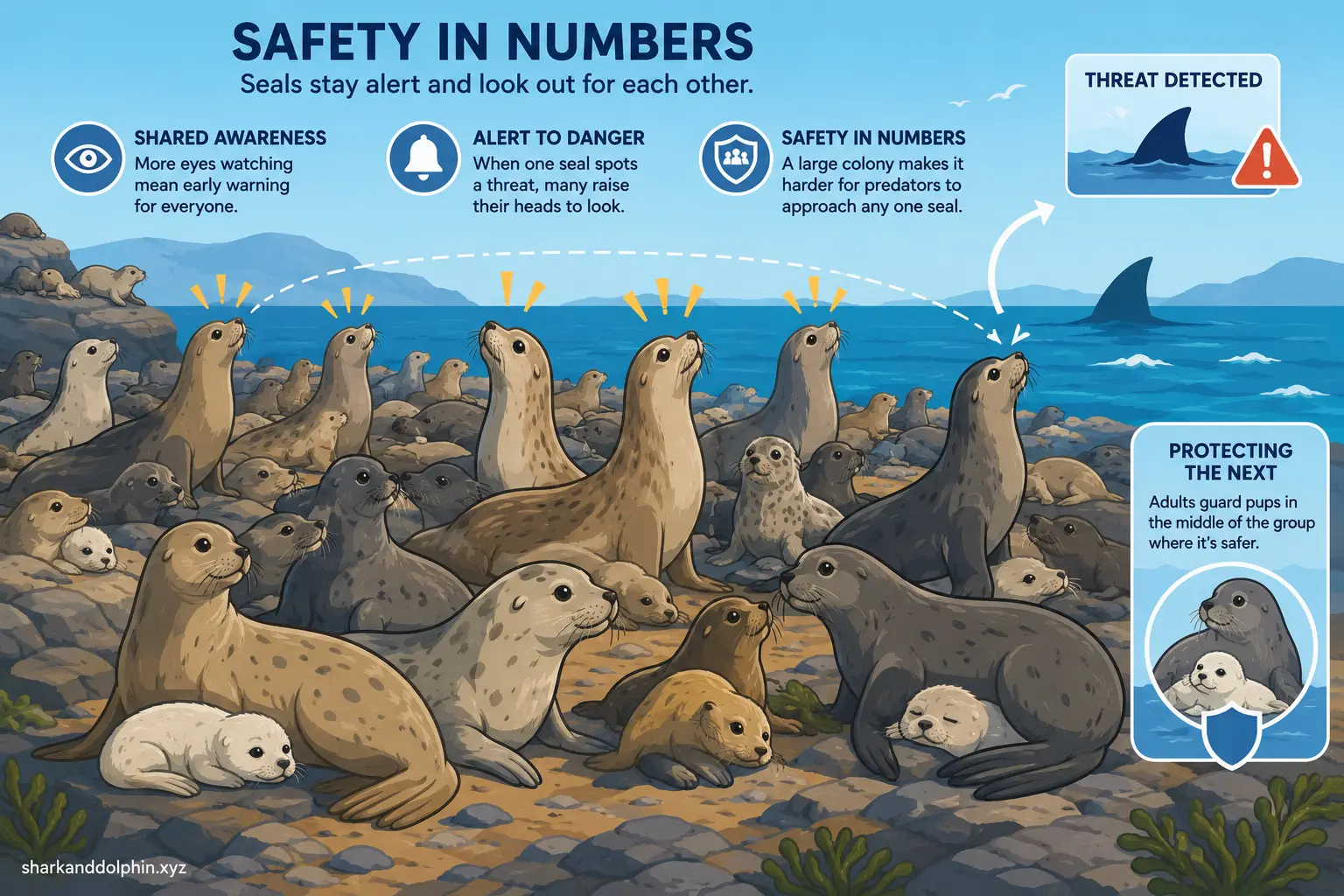
One of the most important advantages of living in groups is protection. The principle of safety in numbers applies across the animal kingdom, and seals are no exception. In large colonies, the risk of any one individual becoming a predator’s target is reduced.
Researchers often reference the “selfish herd” concept, which suggests that animals seek positions within groups that minimize personal danger. By remaining surrounded by others, individual seals lower the odds of being singled out. This strategy is particularly valuable in areas where sharks, orcas, and polar bears are present.
Protection extends beyond direct predator avoidance. Large colonies create a network of awareness. If one animal detects danger, others often respond quickly. This shared vigilance allows colonies to function as collective security systems, improving survival rates for both adults and pups.
Shared Awareness of Predators
Seal colonies operate almost like living alarm systems. A sudden movement, unusual sound, or approaching predator can trigger immediate reactions throughout the group. Because many eyes and ears are constantly monitoring the environment, threats are often detected sooner than they would be by solitary animals.
Young pups benefit significantly from this arrangement. Their vulnerability makes early warning especially important. Mothers also gain advantages because they can focus on nursing and caregiving while remaining part of a vigilant community. In crowded colonies, information spreads quickly through vocalizations and body movements.
The effectiveness of this collective awareness highlights the social intelligence of seals. While they may not cooperate in the same way wolves or primates do, their group behavior still provides meaningful survival benefits. Shared vigilance remains one of the strongest reasons many seal species gather in large numbers.
Species That Prefer Solitary Living
Monk Seals
Not all seals enjoy crowded social lives. Monk seals are among the most solitary seal species in the world. Unlike animals that gather in massive breeding colonies, monk seals often spend long periods alone, meeting others primarily during mating opportunities.
This solitary lifestyle reflects ecological conditions and evolutionary history. In habitats where resources are spread out, independence can be advantageous. Competition for food decreases, and individuals have greater flexibility in choosing resting and feeding locations.
The endangered status of several monk seal populations has increased scientific interest in their behavior. Understanding how solitary species differ from colony-forming species helps conservationists develop more effective protection strategies. Monk seals remind us that seal social behavior exists on a spectrum rather than following a single pattern.
Harbor Seals and Individual Behavior
Harbor seals occupy an interesting middle ground. They are often seen resting in groups, yet many display relatively independent behavior compared with highly social sea lions and fur seals. Individuals may haul out together without forming strong social bonds.
This flexibility allows harbor seals to adapt to changing conditions. They can benefit from group protection while maintaining a degree of personal independence. Their behavior illustrates how sociality is not an all-or-nothing trait. Animals can shift between solitary and group-oriented lifestyles depending on environmental circumstances.
Observing harbor seals offers valuable insight into the diversity of pinniped behavior. Their social arrangements demonstrate that even closely related species can evolve dramatically different approaches to survival and reproduction.
Sounds and Signals Used Within Seal Groups
Vocal Communication
Seal colonies are far from silent. Vocal communication plays a central role in maintaining social relationships, locating offspring, and establishing dominance. Each species possesses its own repertoire of sounds, ranging from barks and growls to underwater calls.
Mother-pup recognition depends heavily on vocal cues. In crowded colonies, mothers must distinguish their own offspring among hundreds of similar-looking pups. Unique calls function like personalized signatures, helping families reunite after separations.
Male vocalizations often serve different purposes. Loud calls can establish territory boundaries, intimidate rivals, and attract females. During breeding season, beaches may echo with a constant chorus of competing voices. These sounds form an essential part of seal society and help coordinate interactions within large groups.
Body Language and Physical Signals
Communication is not limited to sound. Seals rely heavily on body language to convey information. Head movements, flipper gestures, posture changes, and physical positioning all contribute to social interaction.
A dominant male may raise his head and inflate his chest to signal strength. Mothers use gentle touch and positioning to reassure pups. Aggressive encounters often begin with visual displays that allow competitors to assess one another before resorting to physical conflict.
These signals help reduce unnecessary fighting while maintaining social order. Like traffic lights at a busy intersection, body language provides a system for managing interactions efficiently. Understanding these subtle cues allows researchers to interpret behavior that might otherwise appear random or chaotic.
Fascinating Group Behaviors Seen in the Wild
Cooperative Resting and Thermoregulation
One of the most fascinating sights in seal colonies is the tendency to pile together in dense clusters. At first glance, it may look like simple laziness, but this behavior serves important biological functions. By resting close together, seals conserve heat and reduce energy expenditure in cold environments.
Thermoregulation is especially important in polar and subpolar regions where temperatures can be extreme. Huddling creates shared warmth, helping individuals maintain stable body temperatures. This behavior is particularly beneficial for younger animals that have fewer energy reserves.
The image of dozens of seals stacked together like oversized living pillows captures an important truth about wildlife. Cooperation does not always require deliberate teamwork. Sometimes simply sharing space creates survival advantages for everyone involved.
Mother-Pup Recognition
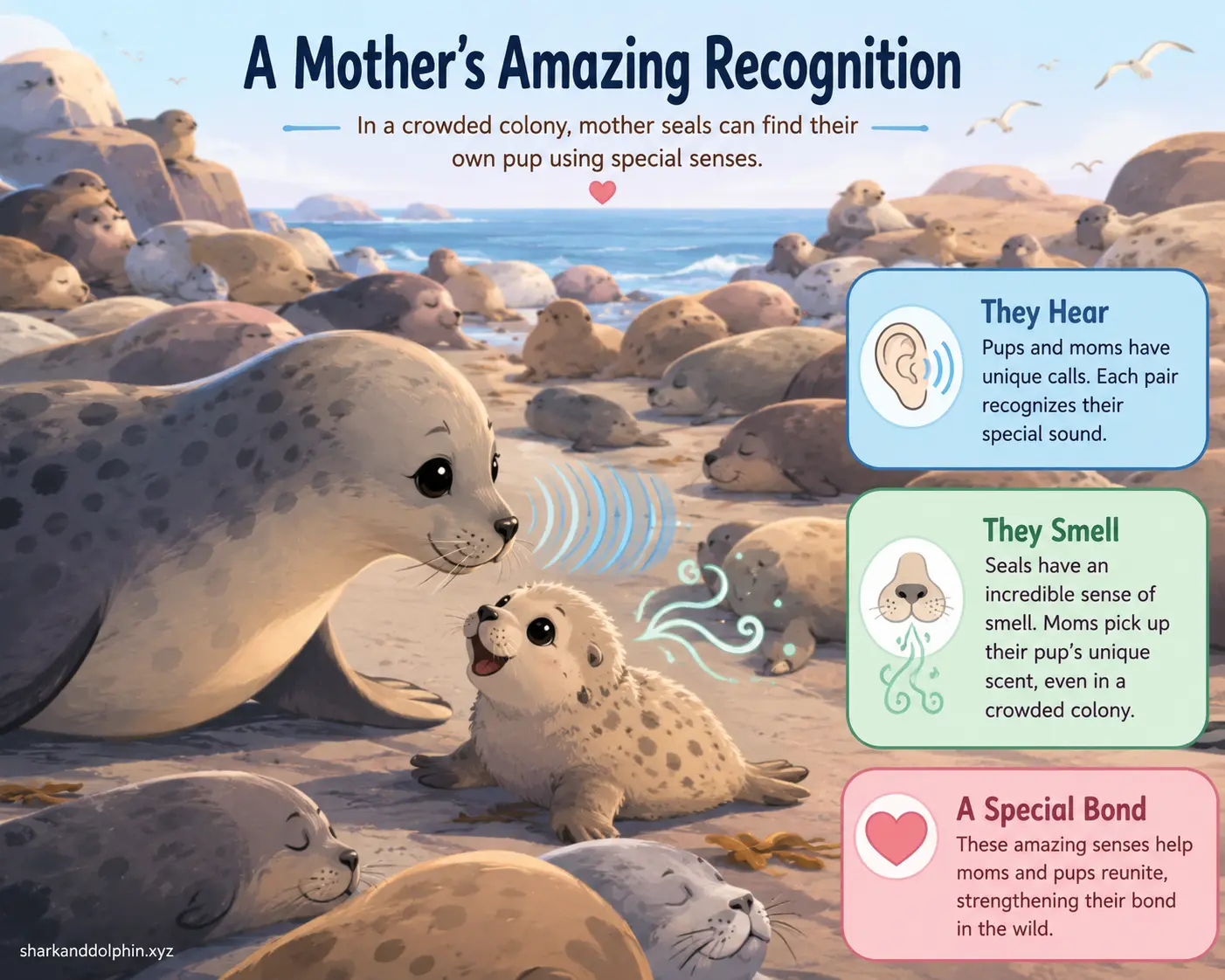
Among the most remarkable behaviors observed in seal colonies is the ability of mothers and pups to recognize one another within enormous crowds. Imagine trying to find your child in a stadium packed with thousands of nearly identical individuals. That challenge is routine for many seal mothers.
Recognition relies on a combination of vocal cues, scent, and memory. Mothers learn the unique calls of their pups shortly after birth, while pups quickly memorize their mother’s voice. This mutual recognition system helps maintain family bonds despite constant movement and noise.
Researchers view mother-pup communication as one of the most sophisticated aspects of seal social behavior. Successful recognition directly influences survival because pups depend on maternal care for nourishment and protection. Watching a mother navigate a crowded colony and locate her offspring demonstrates an extraordinary level of sensory and cognitive ability.
Conclusion
The answer to what is a group of seals called depends entirely on context. A gathering may be described as a colony, pod, herd, rookery, or even a harem, with each term reflecting a different aspect of seal behavior. These names are more than vocabulary curiosities; they reveal how seals adapt their social structures to changing environments, breeding cycles, and survival challenges.
Seal societies are incredibly diverse. Some species gather in enormous colonies containing thousands of individuals, while others prefer a largely solitary existence. Their behavior shifts dramatically between land and water, creating a fascinating blend of independence and cooperation. Seasonal breeding gatherings, vocal communication, predator defense, and mother-pup recognition all contribute to the complexity of their social lives.
The next time you see a photograph of seals crowded onto a beach or swimming together offshore, you’ll know there is much more happening beneath the surface. Each group represents a unique social system shaped by millions of years of evolution, making seals some of the most intriguing marine mammals on the planet.
Frequently Asked Questions
1. What is the most common name for a group of seals?
The most common names are colony, pod, and herd. The appropriate term depends on whether the seals are on land, in water, or engaged in breeding activities.
2. What is a seal rookery?
A rookery is a breeding colony where seals gather to mate, give birth, and raise their pups during breeding season.
3. Why do seals gather in large groups?
Seals gather for protection, breeding, warmth, social interaction, and improved awareness of predators. Group living can significantly improve survival chances.
4. Are all seal species social?
No. Some species form large colonies, while others, such as monk seals, tend to be much more solitary for much of their lives.
5. How do seals recognize each other in crowded colonies?
Seals use vocalizations, scent cues, and memory to identify family members, especially mothers and pups during breeding season.

Drex Voss is a 27-year-old American blogger from Spokane, Washington. He has built experience writing about home improvement, personal technology, and practical everyday solutions while maintaining a strong focus on accuracy and transparency. Drawing from years of freelance writing and editorial collaboration, he creates engaging articles that balance expert research with clear explanations. As an author for sharkanddolphin.xyz, Drex values producing dependable content that readers can confidently rely on.